Every retail design decision can either boost revenue or quietly drain your budget. Some of those decisions are obvious, like a fresh coat of paint or new fixtures. Others are much harder to see, hidden within a brand update that landed at the wrong time and caused chaos to the construction schedule.
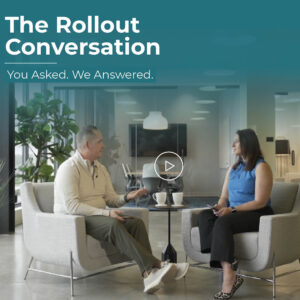
In this second segment of You Asked. We Answered., Jessica Leiter and Erica Schroeder, Senior Project Managers here at ms, draw on years of experience designing spaces that work for the customer and perform financially. Their conversation centers on questions they hear all the time in architecture about getting design and cost right.
Here’s how they think about it…
Q1: What's a time when a small change made a noticeable difference?
Jessica: Two things come to mind.
One is natural light. That’s an easy one.
Another one is traffic flow. Having too much congestion between customers and operational staff who may be doing customer pickup or delivery orders – It really leads to chaotic movement, confusion, congestion and could cause a customer to actually leave the space. It has for me, actually!
Q2: Where have you seen brands overspend without realizing it?
Erica: I would say not having a defined schedule. And it’s not the schedule alone, but making sure the whole team is on board. The design team’s on board, leadership is in alignment, and even your GCs.
Specifically where I see overspend happen is with brand updates. It’s important to make sure those brand updates are always at the beginning of the process. So you’re starting these brand updates at the beginning of CDs.
When brand updates happen in the middle of any process, whether it be the design phase or the construction phase, it causes rework of some sort. If you’re the GC, it means a change directive is coming your way.
Jessica: Big change orders can happen.
Q3: Where does design actually move the needle on revenue?
Jessica: The design can affect how long someone is in the store. It also impacts how easily they can navigate the space. So product placement and customer ease. I think of grocery stores as a great example of this.
Another design item that comes to mind is the checkout corral layout.
Erica: The grab and go!
Jessica: The grab and go! – The leading the customers through a bunch of things that they didn’t even know that they needed.
Erica: Particularly your child.
Jessica: Yes, my kids, they need it!
From a design standpoint, it’s a lot of strategic product placement of small items that are very eye-catching and are typically low dollar amounts. So really having that well-designed corral can increase revenue, especially if that is spread across multiple locations.
Q4: When the owner wish list is long, how do you sort out what really matters?
Erica: I think it really comes down to defining the client’s wants versus needs. And I know that sounds very simple – my son even learned this in first grade this year, so it’s a very simple concept.
But I think it’s really important that we sit down with the client for an exploratory session where the client has an opportunity to explain their vision.
This session creates a list for us. Then, how we attack that list is by identifying which items have a measurable outcome. For example, does it improve revenue? Does it decrease labor? Is it more efficient in any way? Whatever it is, if it has a measurable outcome, it can become a need.
From there it starts to surface the priority items on the list and provides clarity to the client’s vision.
Q5: When you review a concept, what tells you it may cost more than the team anticipates?
Erica: There’s a rule of thumb I tell my clients because it’s very simple. If it takes you a long time to explain the concept, will probably cost you more.
Jessica: Too complicated.
Erica: Yes, too complicated.
And I use the game of telephone as an analogy. So if I tell you my concept, is it the same concept that we get after it’s been explained to person number three or five? If there’s any confusion along the way, that’s an immediate red flag. If it’s too complex, it probably means things like the design detailing is overly complicated and will take longer, or the constructability on site will be more difficult.
So really, the key here is simplicity and clarity will help keep cost down. Complexity will cost you more.
Jessica: Yes. I’ve found that if I have a hard time understanding it, then someone that’s trying to build it is really going to have a hard time understanding it.
Q6: Where do projects most often go over budget and is it avoidable?
Jessica: A lot of it is avoidable.
I would say that lack of planning upfront can really lead to projects going over budget at the later parts of the project. So, doing due diligence at Project Start really helps to surface risks and avoid unnecessary overspending down the road. Things like Geotech reports, traffic studies, tap fee investigation, planning and zoning requirements, etc.
Erica: It always comes down to civil, right?!
Jessica: There’s a lot of civil coordination upfront, yes! Those can be really big-ticket items, and they need to be accounted for in the project budget.
Then after the due diligence period, and once the design decisions start getting made, it’s important to really stick with those big decisions. If those end up changing later on in the process, that has a huge ripple effect into creating change orders and construction-schedule delay that puts things way over budget.
Erica: Right. You’re defining the critical path and you’re sticking to it.
Jessica: Stick to the critical path!
And things change. However, if you’re able to avoid changing those big-ticket items, that will really save some unexpected costs.
Wondering how smart design decisions can help improve your program’s financial performance? Connect with our team to continue the conversation.
Related Articles: