Scaling a brand across new markets sounds straightforward – until the real world shows up. Site conditions don’t cooperate, permitting timelines swing wildly from city to city, and the prototype that worked perfectly for your last ten locations suddenly doesn’t fit the eleventh.
In this first segment of You Asked. We Answered., Ashley Griffin, Senior Project Manager, and Nathan Lephart, Registered Architect and Technical Services Manager, tackle the questions clients ask us most about national rollouts. Things like why some brands scale smoother than others, how to know when it’s time to update a standard prototype, and how a one-month delay can quietly cost brands six figures.
Here’s how our team thinks about it…
Q1: What separates brands that scale smoothly from those that struggle?
Nathan Lephart: I think brands that scale smoothly are clear in their standards and processes. They have playbooks and documents that keep the guardrails on for the project.
What’s a playbook? A playbook can guide design decisions like paint colors, ceiling heights, roof heights, etc. It can also document exactly how the client wants to receive information or how we want to deliver information.
Ashley Griffin: So rules for the program.
Nathan Lephart: It is. It’s easy to design for the 80% of projects that go well or have a lot of known conditions, but having guidelines for the 20% that are always going to be unique is what helps growing brands scale smoothly.
Ashley Griffin: They’re prepared for the unknown.
Nathan Lephart: Right. By comparison, some brands that don’t scale well have inconsistencies that can multiply over time or they try to make unique decisions on every project.
Q2: Where have you seen standard prototypes break down most often?
Ashley Griffin: Well, when the actual site conditions aren’t considered fully upfront – When the real world shows up! This can be anything from onsite conditions, local codes that drive design, or where site utilities are coming into the building. Issues tend to emerge when your perfect-square prototype doesn’t fit an atypical site condition it was never designed for.
Nathan Lephart: Yes, and I’ve seen a trend in the retail industry toward optimizing existing assets rather than focusing solely on new construction. Many prototypes are designed specifically for ground-up development and adapting them to retrofit projects can be challenging. Brands that develop both a new-construction prototype and a retrofit strategy tend to be much more successful.
Ashley Griffin: Exactly. And when we take a client’s program into a new area, we need to understand what we can trade up and trade down. What are the rules? Where do we have flexibility, and where do we need to stay consistent? Having those parameters defined upfront makes it much easier to adapt to different site conditions without compromising the brand experience.
Q3: How do you know when it's time to adjust a standard prototype?
Nathan Lephart: Well, the easy answer is when you start seeing the same issue repeat itself across projects. That’s usually a sign that it’s time to update the standards so you can flow that more efficiently into future projects. But the real trick is to have a regular cadence with updates. You don’t want to be too reactive or make significant updates in the middle of active projects, as that can create unnecessary disruption and really slow things down.
Ashley Griffin: Do you see any outside factors besides design or construction that could drive updates?
Nathan Lephart: Yeah. Especially in retail, the customer has a big impact. Market research around changes in consumer behavior can drive adjustments the prototype beyond typical design or construction considerations.
Ashley Griffin: Yeah. I think that’s that fine balance too between reacting quickly, but not too quickly or too often.
Nathan Lephart: Right, right.
Q4: What's one of the biggest challenges you've seen in keeping a national rollout on schedule?
Ashley Griffin: Keeping a program on schedule. . . this is one I’m living in right now. I’m seeing permitting times vary widely across the country – anywhere from three weeks to three months. There are also so many construction unknowns right now. We really just focus on controlling the controllable. And for us, that’s maintaining the design schedule and having clear communication with the client.
Q5: How does opening even one month early change the financial picture of a project?
Ashley Griffin: Yeah, that’s a great question. As we know, time is money. From the design team to the construction team, every day a location isn’t open means lost revenue, lost sales, and the client isn’t getting a return on their investment.
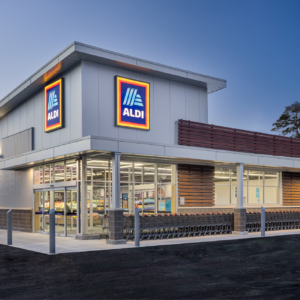
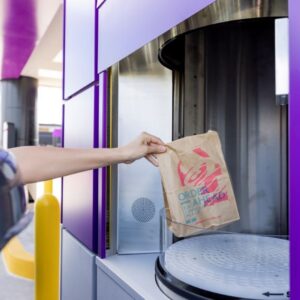
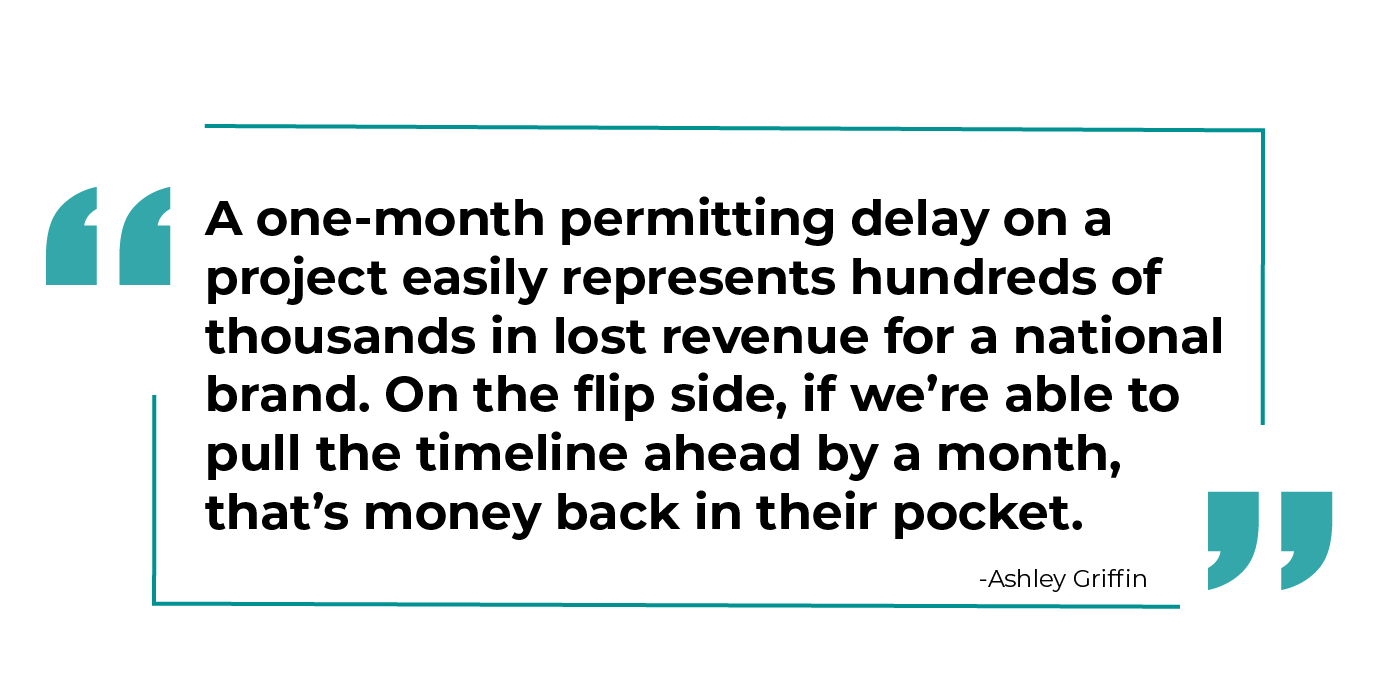
I recently read that the average revenue of a grocery store is around $40,000 per day. On a smaller scale, a QSR is around $5,000 per day. So quick math, multiplying that across a month is about $150,000 that they’re losing by not being open. So when you think about a one-month permitting delay—or, on the flip side, if we’re able to create efficiencies and pull the timeline ahead by a month—that’s money back in their pocket that can represent a meaningful difference in revenue for the client.
Nathan Lephart: And that’s why we always hear speed to market is so important. Those financial impacts multiply over time.
Ashley Griffin: Absolutely.
Have questions about prototype development, national rollouts, or program optimization? Connect with our team to continue the conversation.
Related Articles: