
/www.msconsultants.com/project/ysu-athletic-training-facility/
Challenge
To meet the demands of its college athletes year-round, Youngstown State University wanted to construct an energy-efficient, multi-purpose, indoor, athletic training facility.
Services Involved
- Architecture
- Bidding Assistance
- Building Structures
- Construction Administration
- Electrical Design
- Landscape Architecture
- LEED Certification
- Programming
- Survey
- Sustainable Design
Awards
2013 Honor Award
American Council of Engineering Companies (ACEC) of Ohio
YSU Athletic Training Facility
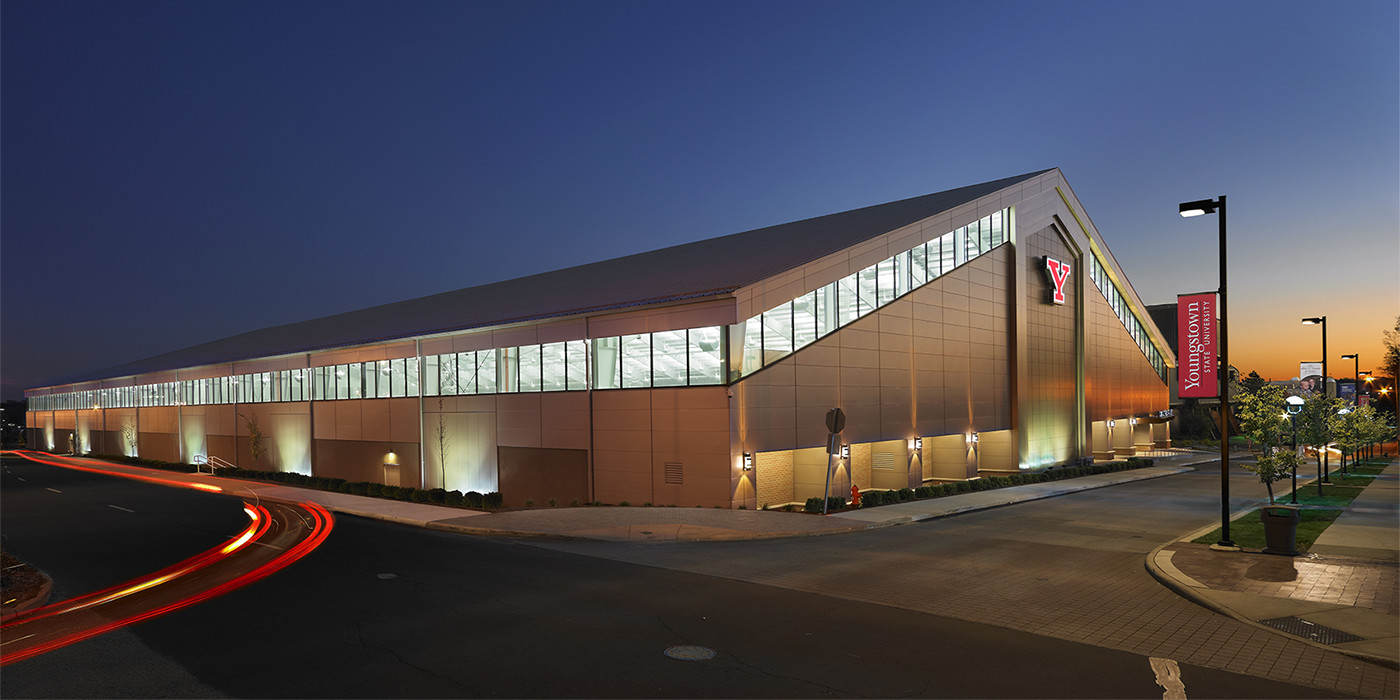
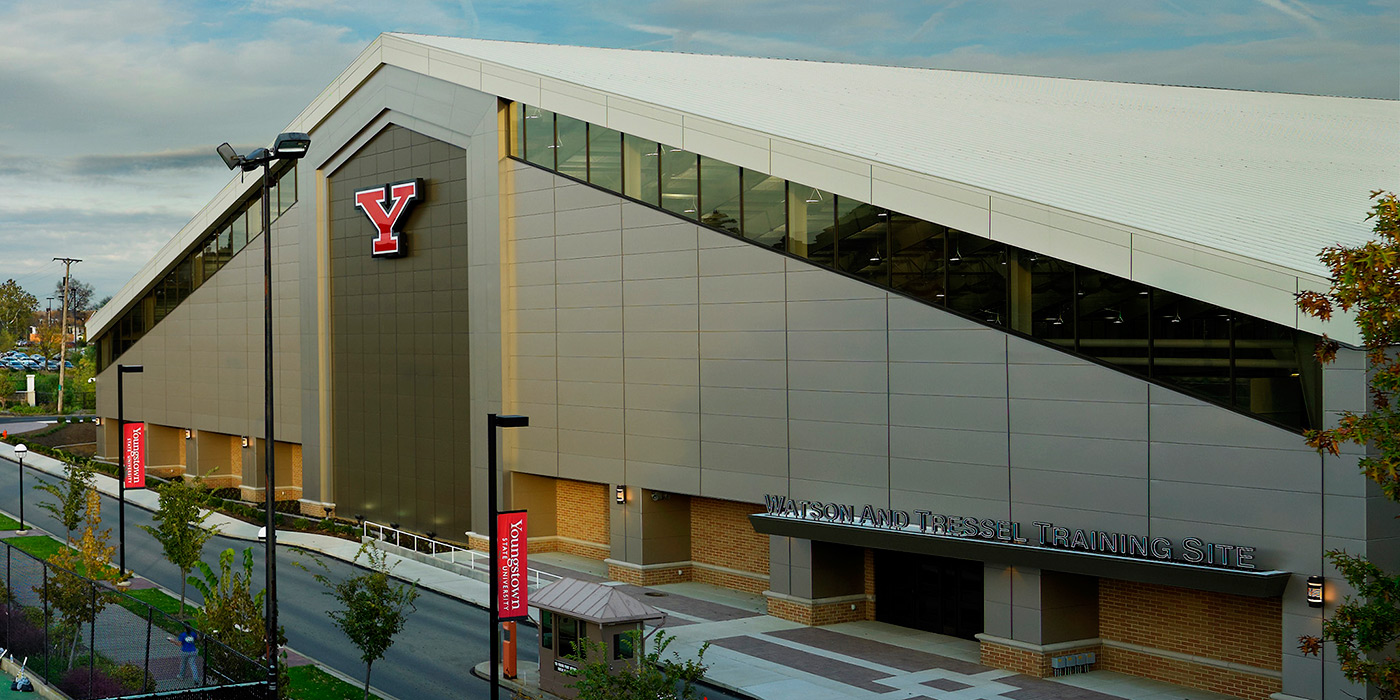
ms consultants provided an initial program assessment, final design services, LEED services, and construction administration for the 125,000-square-foot Watson and Tressel Training Site (WATTS) at Youngstown State University (YSU). The new indoor athletic training facility provides year-round training amenities and protection from adverse weather conditions. The YSU athletic training facility also promotes sustainability with a LEED Silver certification.
WATTS FACILITY DETAILS
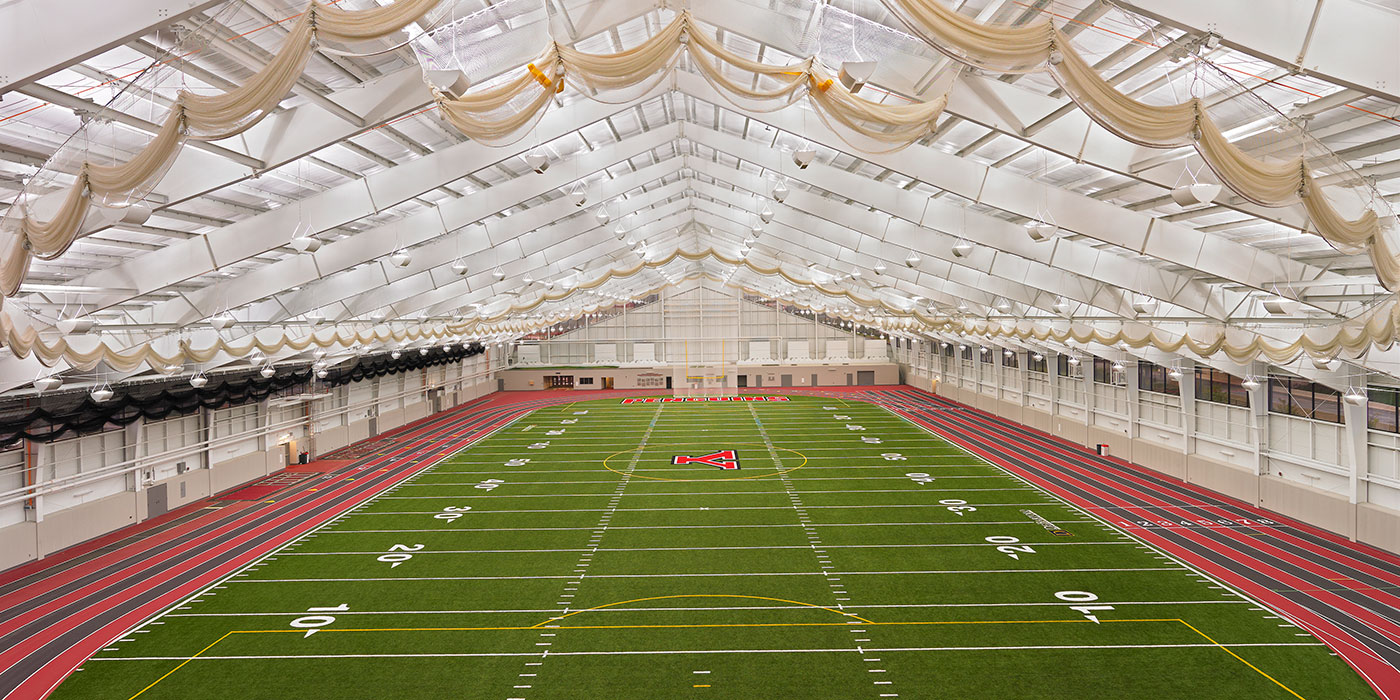
To support various athletic teams, intramural sports, and campus-wide activities, the WATTS facility includes:
- Indoor football field with a synthetic turf system
- 300-meter track
- Long jump and high jump pits
- Four batting cages
- Training room
- Locker rooms
SUSTAINABLE DESIGN
The design team worked to achieve LEED Silver certification. Sustainable design features for the athletic training facility include:
- Reflective paving surfaces in the limited parking area
- Reflective roof material to limit heat island effects on the building and surrounding campus area
- Anticipated energy consumption savings of 35% annually
- 46% reduction in water consumption through efficient water fixtures
- Regional plant materials that eliminate the need for irrigation
- Waste was recycled and diverted from local landfills during construction
- Utilization of recycled materials from regional manufacturers within a 500 mile radius
- The interior envelope utilizes low emitting finishes to improve the indoor air quality for building occupants
- The site is located on multiple public transportation routes and accessible to basic community services for walkability
The WATTS facility was one of the first LEED buildings on YSU’s campus and the first certified under LEED v3. Check out some other sustainable designed projects out here.
DESIGNING THE WATTS FACILITY
Initially, ms conducted a preliminary program assessment to determine the necessary requirements and potentialities. Due to the planned size of the athletic training facility, ms reviewed four possible sites located on the YSU campus.
These sites were evaluated for both positive and negative attributes regarding site conditions, proximity to existing athletic infrastructure, available parking, pedestrian and traffic control, site densities, and visual impact analysis.
ms architects collaborated with YSU officials in selecting a preferred site (Elm Street at Eastbound Service Road) and a building type (a conventional metal facility), and worked with the project team on final design details.
Design development, contract documents, specifications, and bidding assistance were provided by the team for the architectural, electrical and structural elements of the building with assistance of teammates CJL Engineering for mechanical/electrical/plumbing design and Resource International for site civil engineering.
NATIONALLY-FEATURED PROJECT
The Youngstown State University WATTS facility was featured in the December 2012 issue of College Planning and Management magazine.